
What to Expect From Your First Jewellery Making Class
Have you been thinking about joining a jewellery workshop in your area to create your own ring, booking one while on holiday, or perhaps you have received a jewellery workshop gift voucher and are unsure what to expect?
Feeling nervous is actually one of the most common things I encounter when shaking my students’ hands on their first day — whether it is for a one-day ring making workshop or the beginning of a longer jewellery course. It is completely natural.
You are trying something for the first time and already putting pressure on yourself to create something beautiful. Many students arrive worried they might be “the clumsy one” from their old high school metalwork class, or that the handmade ring or jewellery piece they want to create for someone special could end up looking uneven or unfinished.
As a manufacturing jeweller and goldsmith, my role as a teacher is not to throw beginners into the endless possibilities of jewellery making without guidance. The most important part of learning jewellery design and goldsmithing is understanding how tools, metal, and surfaces behave together.
Jewellery making is really about learning problem solving through your hands.
As a beginner, you learn:
how different tools shape metal,
how pressure changes form,
where to hold, push, pull, hammer, file, and bend,
and how to think ahead structurally before making your next step.
One side of a ring may need support while another side can easily become too thin, crack, or move out of shape. Discouraged students are often simply skipping the smaller steps that I learned myself during my years of goldsmith training and manufacturing jewellery work.
Jewellery Making Is Surprisingly Therapeutic
Feeling nervous before a jewellery workshop usually means you genuinely care about creating something meaningful.
One of the beautiful things about jewellery making is that it naturally slows people down. The repetitive movements of filing, sawing, sanding, hammering, and shaping metal become surprisingly meditative. Creating something with your hands can release dopamine — the brain’s reward chemical connected to accomplishment and satisfaction — while also helping reduce stress through focused, rhythmic work.
That small piece of silver sitting on your bench peg often becomes a proud moment much sooner than expected.
Why I Teach Jewellery Workshops in Sterling Silver
Many beginner jewellery workshops use brass or copper because they are inexpensive materials. While those metals are useful for practice, I personally prefer teaching beginner ring workshops in sterling silver.
Sterling silver is:
easier to shape,
easier to solder,
forgiving for beginners,
and allows mistakes to be corrected more successfully.
Gold is actually one of the easiest metals to work with due to its softness and malleability, but sterling silver offers a beautiful balance between affordability and professional jewellery-making techniques.
Learning to Make a Sterling Silver Ring
I like to begin workshops with a sterling silver ring design because ring making introduces students to many of the core jewellery making tools and techniques used in traditional goldsmithing.
During a jewellery workshop, students may learn how to use:
a rolling mill,
jewellery saw,
ring mandrel,
hammering blocks,
ring benders,
pliers,
files,
polishing tools,
and soldering equipment.
We begin by rolling and shaping silver wire or sheet metal, measuring and cutting the correct ring size, and carefully bending the metal into shape before soldering the join together.
Soldering is usually the moment students become both nervous and excited. It introduces important jewellery-making concepts such as:
metal temperatures,
solder flow,
structural strength,
and why different solder grades melt at different stages.
After soldering, the ring is cleaned, hammered round on a mandrel, refined with files, polished, textured if desired, and finally transformed into a finished sterling silver ring band — often within approximately three hours.
The purpose of these structured stages is not simply to finish a ring, but to help students understand how jewellery tools guide metal into shape and how problem solving becomes part of the creative process.
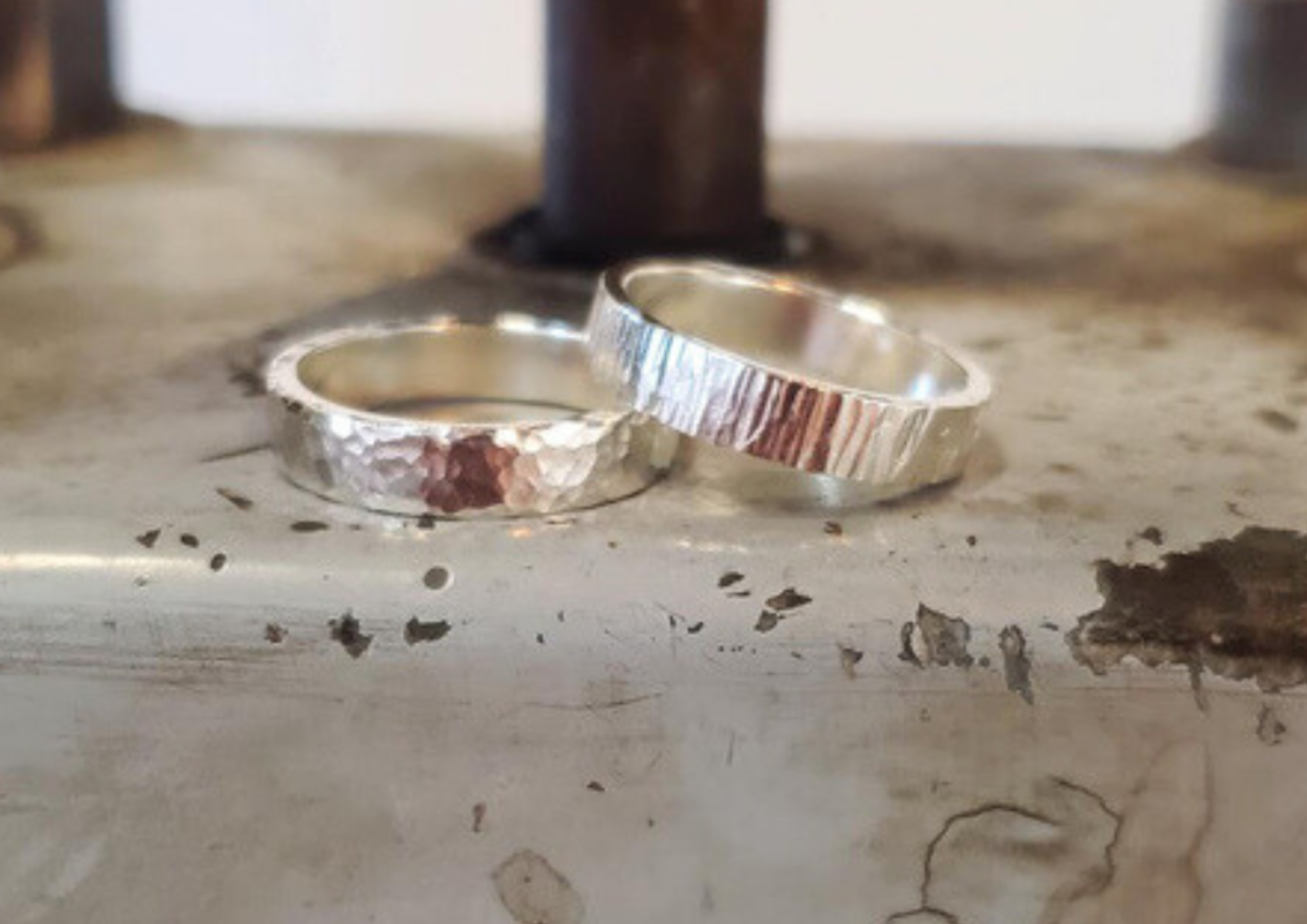
two sterling silver rings created by one of my students. both have a hammered finish using two different tools.
Beyond Beginner Jewellery Workshops
Once students understand the foundations of jewellery making, we can move into more advanced techniques including:
flush stone setting,
wax carving,
sand casting,
textures,
freeform jewellery design,
and more sculptural contemporary jewellery techniques.
Watching students gain confidence with every workshop is one of the most rewarding parts of teaching. The struggle, mistakes, and experimentation are all part of learning the craft — and often the moments people remember most proudly once they hold their finished piece in their hands.
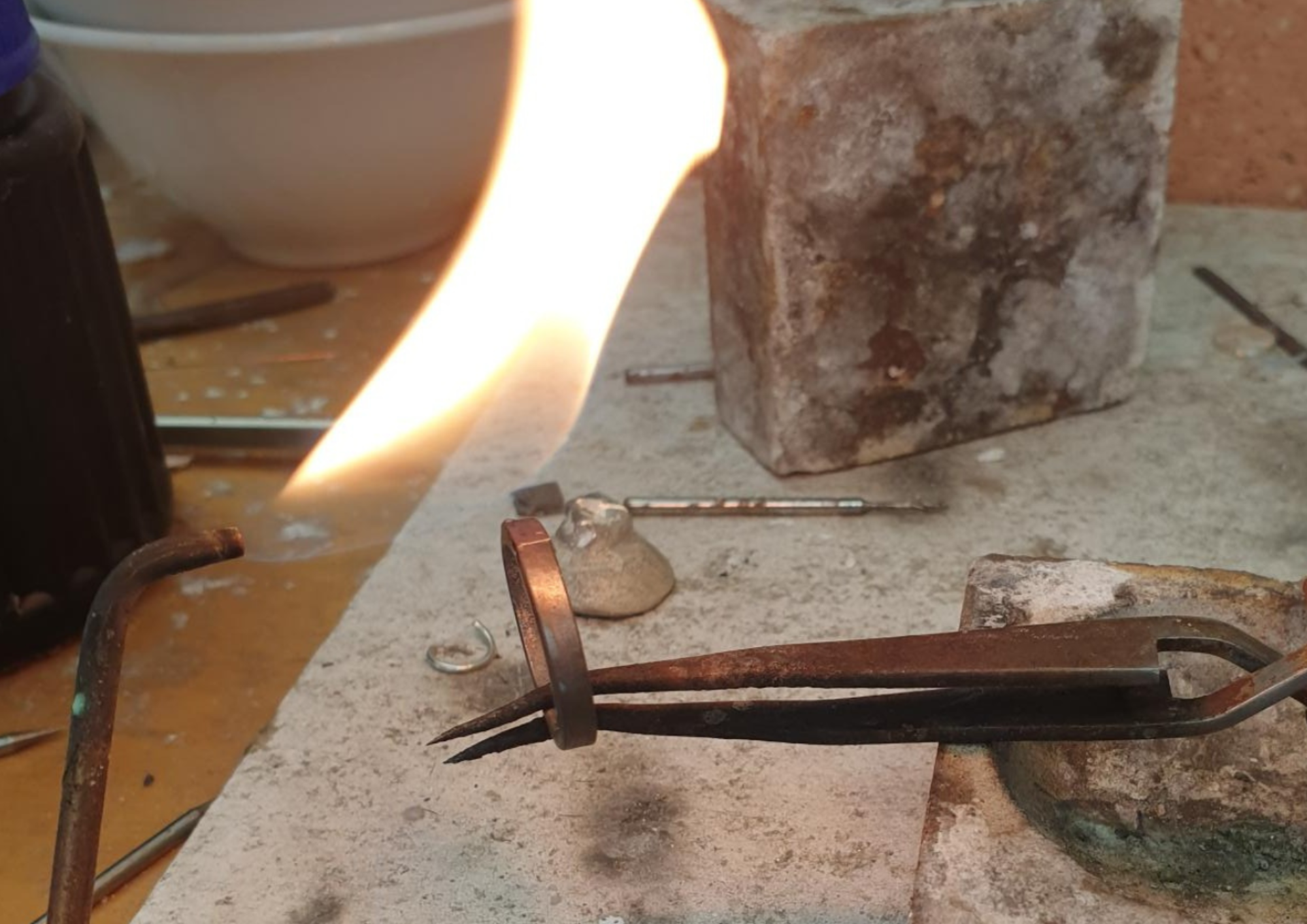
The process of soldering a ring band is an important part of learning the art of making jewellery and one of the most exciting workshop actions.
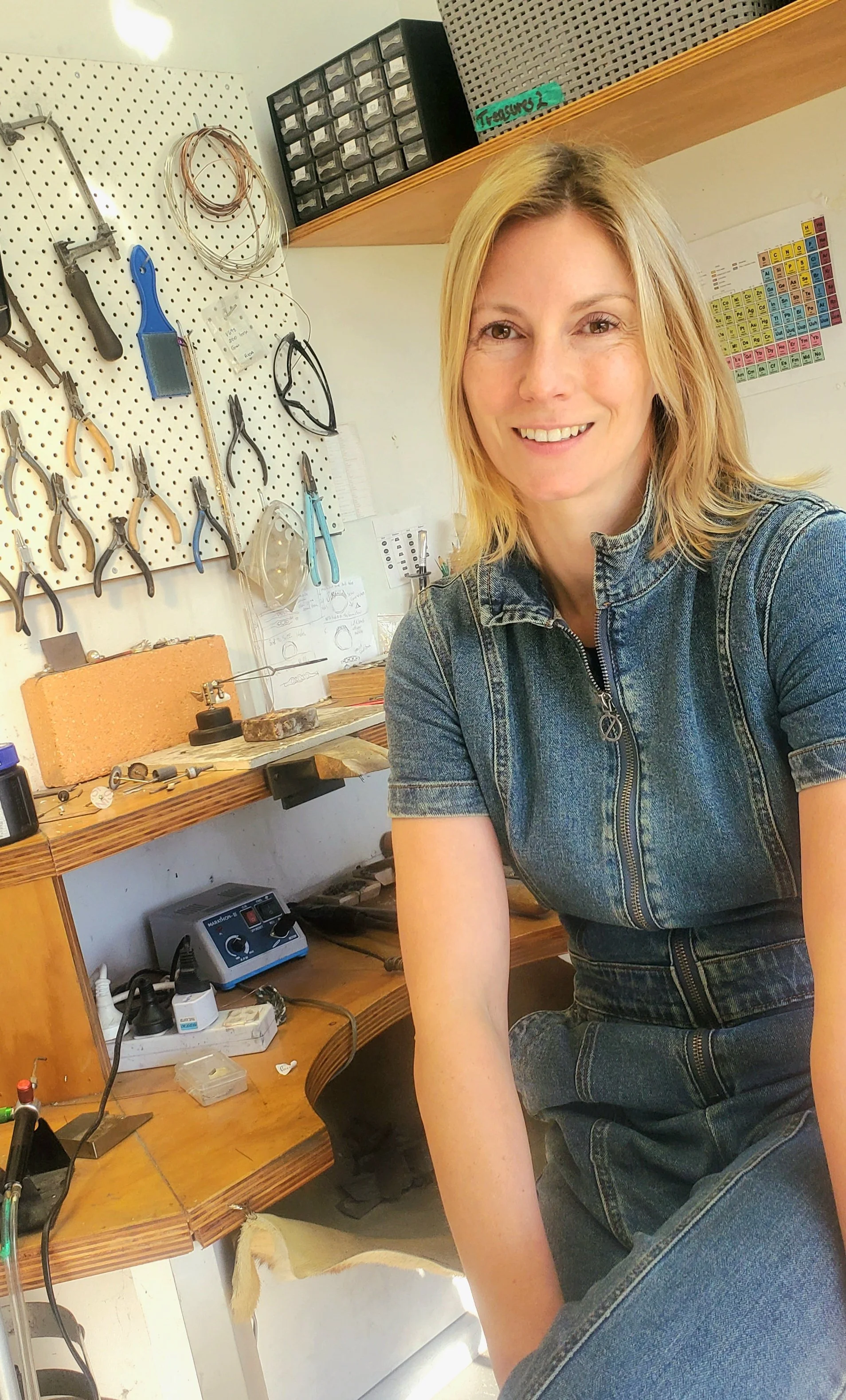
Welcome to my workbench